Reflexology uses thumbs and fingers to apply varying pressure across the soles, sides, tops, and toes of the feet. Practitioners follow a traditional map that associates foot zones with broader body regions. ENZO explains that tradition clearly while never presenting the map as proven anatomy or using tenderness to diagnose a health problem.
ENZO presents reflexology as a complementary relaxation practice. It does not diagnose illness, rebalance hormones, induce ovulation, release toxins, or treat a medical condition.
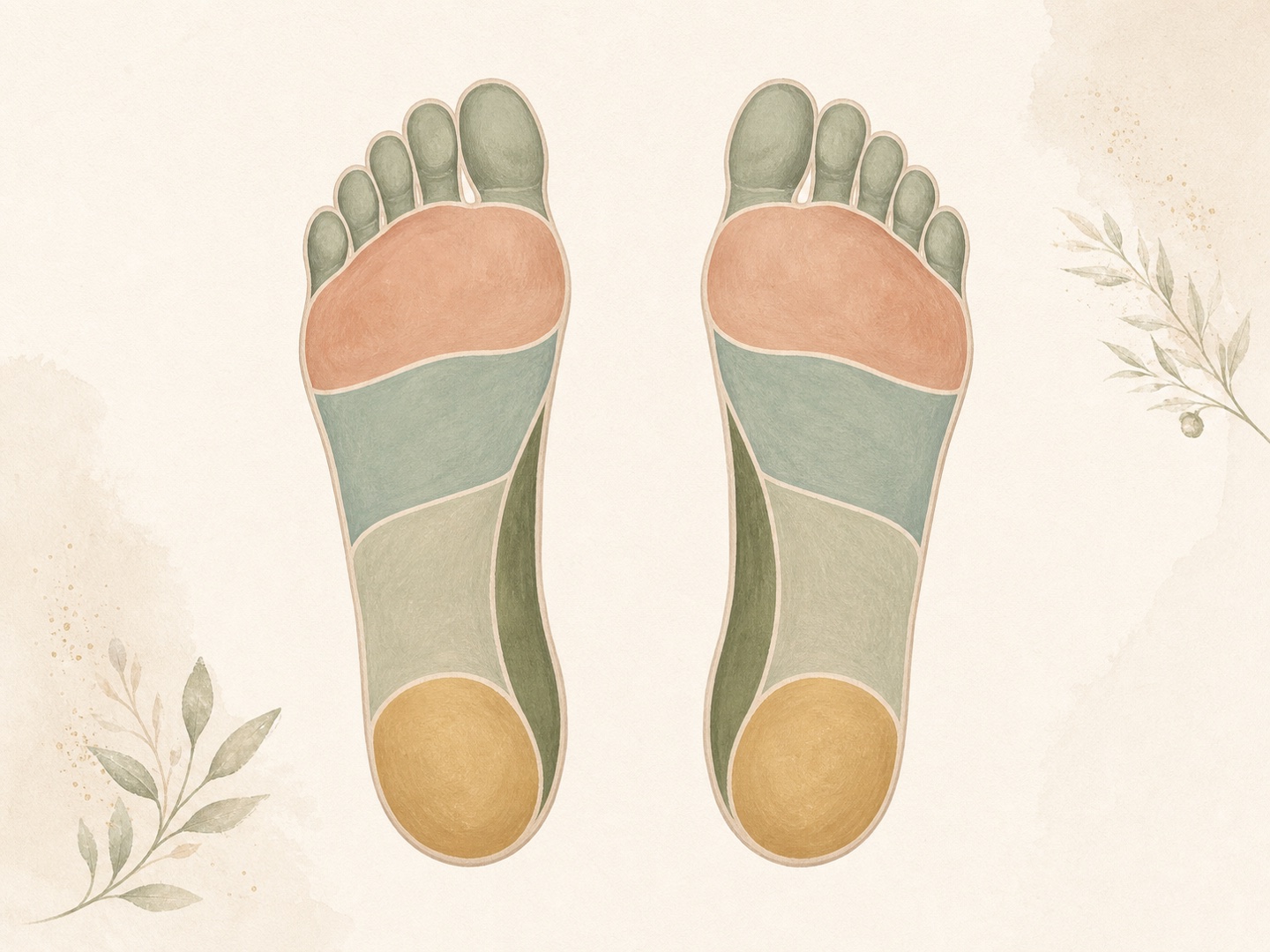
The traditional foot map
See how practitioners read the foot.
Reflexology charts organize the feet into broad zones traditionally associated with other regions of the body. Maps vary, and these correspondences are not anatomy, diagnosis, or proof that pressing a point changes an organ.
010203040506Traditional correspondence guide—not a medical anatomy chart.
01
ToesTraditionally associated with head and neck
02
Ball of the footTraditionally associated with chest and upper back
03
Upper archTraditionally associated with upper abdominal region
04
Lower archTraditionally associated with lower abdominal region
05
Inner edgeTraditionally associated with spine line
06
Heel and ankleTraditionally associated with pelvis and lower back
A tender area is not evidence of a problem in a corresponding body part. ENZO uses the map to explain the tradition and guide a consistent pressure sequence—not to diagnose or treat disease.
Why people make room for it
An hour with a clear purpose.
Choose reflexology when your mind is still moving but you want the rest of you to stop. Because the work stays focused at the feet, the experience can feel contained, private, and easy to receive while fully clothed.
You want a clear transition out of a demanding day.
You prefer focused touch rather than full-body bodywork.
You value a quiet session with minimal setup and no drive home.
Focused touch, a supported position, and a pace that never needs to be rushed.
The experience in practice
Pressure that follows your comfort.
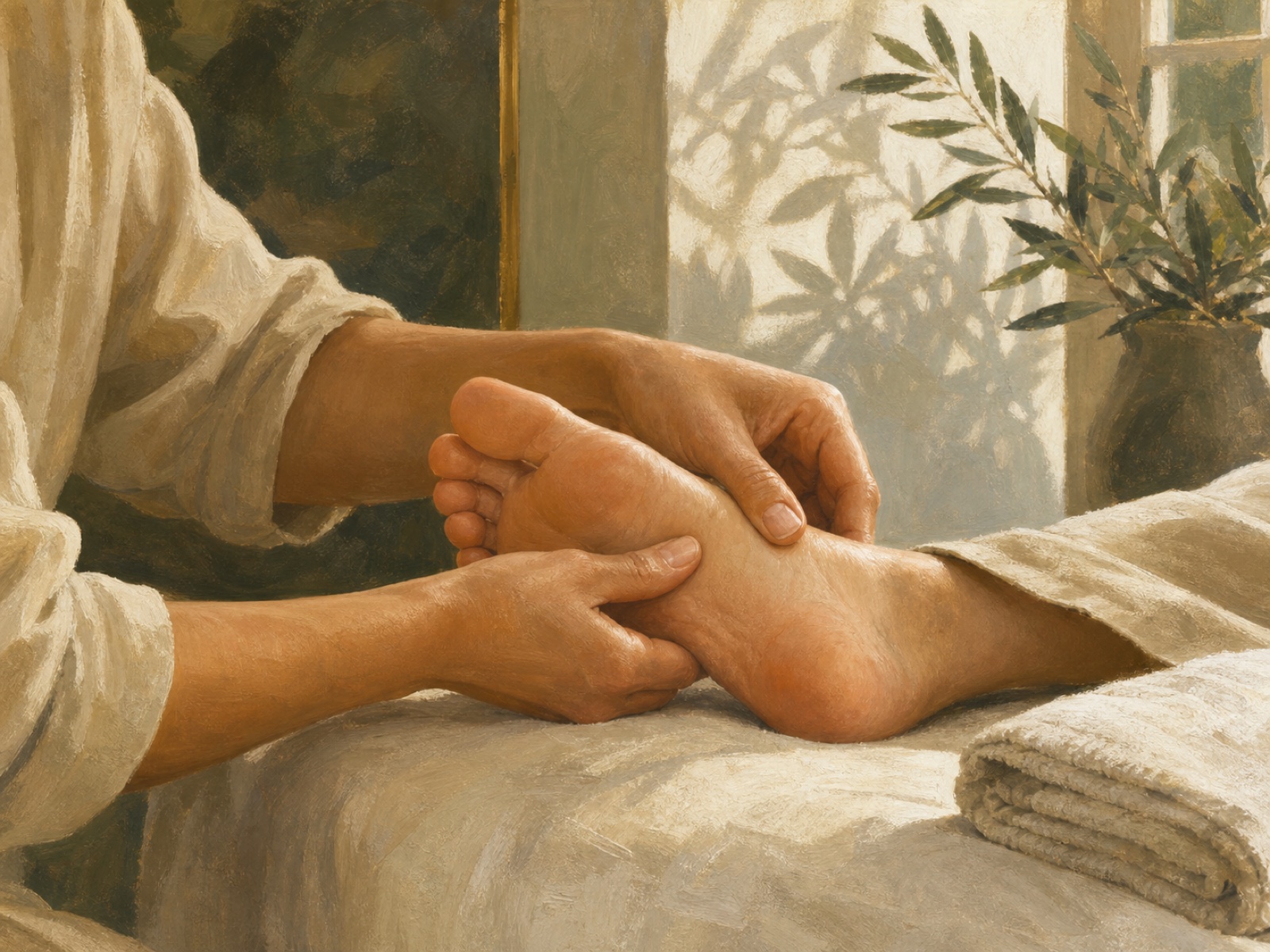
Adrienn works across the soles, sides, tops, and toes in a deliberate sequence, checking pressure as she goes. Some moments may feel broad and settling; others more focused. You stay in charge of what feels welcome.
What happens
A session shaped around consent.
01
A brief review of comfort, pressure, temperature, and consent
02
Supported positioning while you remain comfortably clothed
03
A systematic thumb-and-finger sequence across agreed areas of the feet
04
Pressure adjusted whenever an area feels too light, strong, or tender
05
Quiet is welcome; conversation is never required
06
A slow close so you can reorient before returning to the day
Before and after
A little preparation. No performance.
Prepare
Wear clothing in which you can settle comfortably.
Share pressure, temperature, scent, and accessibility preferences before the session.
Plan a small clear area with a chair or treatment setup; ENZO will confirm details.
After
Give yourself a few quiet minutes before returning to a demanding task.
Notice your comfort and contact Adrienn with any unexpected concern.
Questions, answered clearly
Foot Reflexology FAQ
Is reflexology the same as a foot massage?
Both involve touch to the feet, but reflexology uses a distinct pattern of pressure associated with a traditional point-map system. ENZO explains that tradition without presenting it as proven anatomy.
Do I stay clothed?
Yes. Wear comfortable clothing and expect only the feet and, when agreed, lower legs to be accessible.
What does reflexology feel like?
Pressure can move from light to more focused and may feel especially noticeable in some areas. It should remain within your comfort. You can ask for less pressure, skip a point, pause, or stop at any time.
Does a tender point mean something is wrong with an organ?
No. Tenderness in the foot is not a diagnosis and should not be interpreted as proof of a problem elsewhere in the body. New or concerning symptoms belong with a qualified clinician.
Can reflexology help me become pregnant?
ENZO does not make that claim. A small sham-controlled trial did not establish reflexology as a clinically relevant way to induce ovulation. It may be chosen only as a calming complementary ritual while fertility care remains with your medical team.
A private reset, brought home
Let foot reflexology come to you.
Tell Adrienn what you need from the experience. She’ll confirm the route, current menu, and every practical detail before your visit.